
Best Place to Keep Washing Machine at Home
Discover how to choose the perfect location for your washing machine. Avoid common mistakes and improve safety, efficiency, and lifespan.
APPLIANCE CARE
4/22/20261 min read

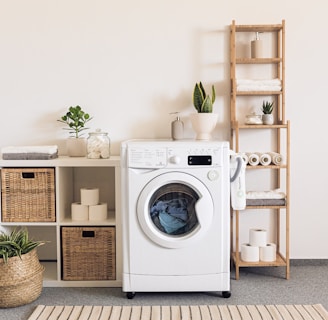
Start With This Question
Where you place your washing machine isn’t just about convenience.
It directly affects:
Performance
Lifespan
Safety
Noise levels
A poor location can quietly damage your machine over time.
The Ideal Setup (Quick Snapshot)
Think of the perfect washing machine location like this:
Dry but ventilated
Close to water supply
Near proper drainage
Stable and level surface
Protected from direct sunlight and rain
If your spot checks all five, you’re already ahead of most people.
Common Locations: What Works and What Doesn’t
1. Bathroom
Why it works:
Easy water access
Built-in drainage
Hidden problem:
High humidity can cause rust and mold
Verdict: Good, but only if well-ventilated
2. Balcony
Why people choose it:
Saves indoor space
Keeps noise outside
Hidden problem:
Rain exposure
Sun damage
Dust buildup
Verdict: Risky unless fully covered
3. Kitchen
Why it works:
Water connections already available
Convenient for small homes
Hidden problem:
Limited space
Heat and grease exposure
Verdict: Works in compact setups
4. Dedicated Laundry Area
Why it’s best:
Designed for appliances
Balanced ventilation and protection
Verdict: Ideal choice if available
5 Things You Must Check Before Finalizing
1. Floor Stability
Your machine vibrates. A weak or uneven surface will:
Increase noise
Damage internal parts
Always place it on a flat, solid floor.
2. Proper Drainage
Water should flow out easily.
Avoid locations where:
Water collects around the machine
Drain pipes need sharp bending
Poor drainage leads to leakage and smell.
3. Ventilation
A closed, damp space is a silent killer.
Make sure:
Air can circulate
Moisture doesn’t stay trapped
This prevents mold and bad odor.
4. Distance From Walls
Leave some breathing space.
At least a few inches from walls
Enough room for pipes and wires
This prevents overheating and pipe damage.
5. Access to Power Supply
Electric safety matters more than convenience.
Use a dedicated socket
Avoid extension cords
Keep it away from water splashes
Mistakes Most People Don’t Notice
Placing the machine directly on wet floors
Keeping it tightly squeezed between walls
Ignoring sunlight exposure
Using it in areas prone to waterlogging
These don’t cause instant damage, but they shorten the machine’s life slowly.
A Simple Rule to Remember
If the place feels damp, cramped, or exposed,
it’s not the right place.
Read More:
How to install a washing machine
How to reset refrigerator temperature setting